How to Get Your First Customers as a Self-Employed Tradesman

The hardest part of going self-employed isn’t the work – it’s filling the diary. Most tradespeople who strike out on their own are excellent at the job. The skills that got them through their apprenticeship aren’t the problem. The problem is that nobody told them how to find work.

Here’s the truth: your first 20 customers will come from people who already know you. After that, if you’ve done the job right, most of the next 100 will come from those first 20. Word of mouth is still the most powerful marketing tool in the trades – but you have to build the conditions for it to work.
This guide covers exactly how to do that, from day one.
Start With What You’ve Already Got
Before you spend a penny on advertising or sign up to a lead generation platform, work through the following list. Every person in these categories is a potential first customer or referral source:
- Former workmates and apprenticeship contacts – people who know your work quality firsthand
- Friends and family – obvious, but systematically overlooked. Message everyone, not just the ones you’re close to
- Previous employers – they may have overflow work, or customers who call back asking for the same trades
- Neighbours – they can see your van, your work, and talk to you in person
- Local small businesses – shops, offices, pubs, restaurants all need maintenance work done
- Your partner’s or family members’ contacts – you’d be surprised how many jobs come from someone’s mum’s book club
Don’t be shy about this. You’re not begging for favours – you’re letting people know you’re available. A simple WhatsApp message along the lines of “I’ve just gone self-employed as an electrician – if you or anyone you know ever needs any electrical work done, I’d love to help” takes two minutes and costs nothing.
Send it to every contact in your phone. Do it this week.
Set Up Your Google Business Profile
This is the single most important free thing you can do. When someone in your area searches “plumber near me” or “electrician [your town]”, Google shows a map with local businesses. If you’re not on that map, you don’t exist.

How to set it up:
- Go to business.google.com and create a free profile
- Set your business name, trade/category, and service area (the towns you cover)
- Add your phone number and website (even a basic one)
- Upload photos – your van, your tools, completed jobs
- Ask every early customer to leave a Google review
That last step is critical. A profile with zero reviews ranks poorly and gets ignored. A profile with 10 genuine 5-star reviews ranks well and converts. Getting those first reviews is the single highest-leverage activity you can do in your first six months.
Get on the Right Lead Platforms – Selectively
Lead generation platforms get a mixed reception from tradespeople. They can be expensive, competitive, and full of low-quality leads. But in your first few months, before you have a reputation to trade on, they can help fill the diary.
The main options in the UK:
| Platform | Model | Best for |
|---|---|---|
| Checkatrade | Monthly fee + leads | Established presence, good for profile building |
| Rated People | Pay per lead | Flexible, good for testing |
| MyBuilder | Pay per lead | Good volume, competitive |
| TrustATrader | Monthly fee | Solid for longer-term presence |
| Bark.com | Pay per contact | Variable quality, can be hit and miss |
The right approach: Pick one or two, not five. Learn how the platform works, write a strong profile, respond to leads fast (within minutes, not hours), and collect reviews aggressively. A tradesperson with 50 reviews beats a tradesperson with 5 every time, regardless of price.
Important: Don’t become dependent on these platforms. Your goal is to build your own pipeline – repeat customers, referrals, your own website – so that you’re not paying for leads indefinitely. Treat lead platforms as a short-term bridge.
Build a Basic Online Presence
You don’t need a fancy website on day one. You do need something. A professional-looking one-page website with your name, trade, location, phone number and a handful of photos of completed work is enough to get started.
Options by budget:
- Free/cheap: A Facebook Business page or Instagram profile – genuinely enough to start with, and easier to get found locally
- Low cost: Wix or Squarespace template site – £10-15/month, looks professional, no coding needed
- Proper: WordPress – more effort to set up but builds long-term SEO value and you own it completely
Whatever you do, make sure your name, location and phone number are visible on every page. Sounds obvious. You’d be surprised how many trades sites make you hunt for a phone number.
Get Visible in Your Local Community
Online is important. So is offline – especially in your early months.
Practical steps:
- Branded workwear – a polo or jacket with your name and number. You’re a walking advert every time you’re on a job or in a queue at the merchant
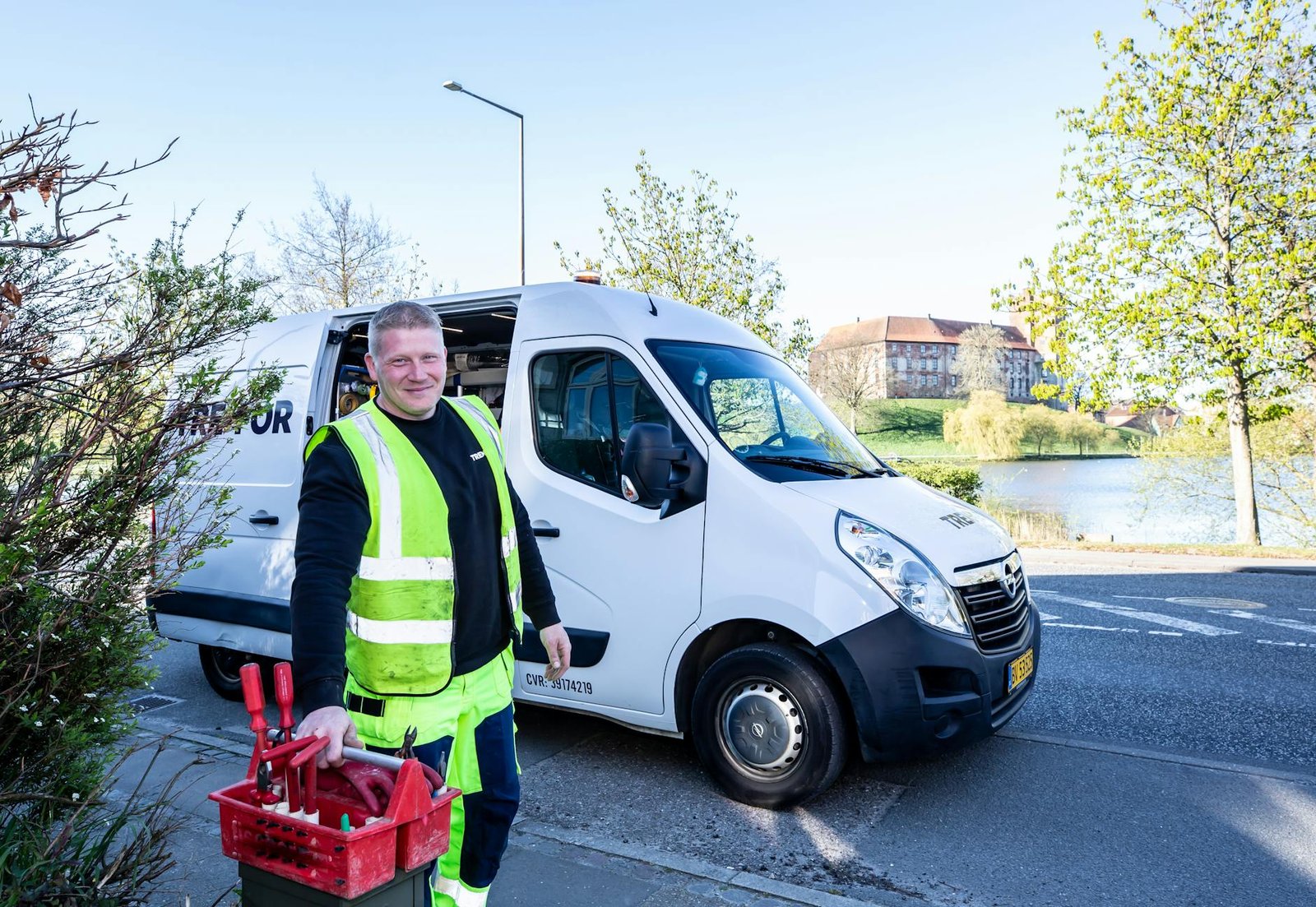
- Van signage – even basic magnetic signs are worth having. A parked van on a street generates enquiries
- Leaflets – targeted drops in streets where you’ve recently done a job. “Your neighbour at No. 14 recently had us in for…” works well
- Local Facebook groups – most towns have “recommend a tradesperson” groups. Join them, introduce yourself, don’t spam, be helpful when people ask questions
- Business cards – still useful. Leave them with happy customers, the merchant, local letting agents
Look After Your First Customers Exceptionally Well
Your first 10 customers aren’t just jobs. They’re your marketing department.
Every one of them has neighbours, friends, family members, a Facebook account and a Google account. If you do excellent work, arrive when you say you will, communicate clearly, tidy up after yourself and send a professional quote and invoice – they will tell people. And those people will call you.
The practical checklist for every early job:
- Confirm the appointment the day before – shows reliability, reduces no-shows
- Arrive on time or message ahead if you’re running late – respect their time
- Explain what you’re doing and why – customers love feeling informed
- Tidy up – completely. Leave the space better than you found it
- Follow up after – a quick “Just checking everything is working well?” message a week later gets remembered
- Ask for a review – directly and specifically: “Would you mind leaving me a Google review? It really helps when I’m just starting out.” Most people are happy to if asked
What Not to Do
A few common early mistakes that slow down customer growth:
- Undercharging to win work – it attracts the wrong customers and sets a precedent that’s hard to change
- Signing up to too many lead platforms – you’ll spread yourself thin and spend more than you earn
- Ignoring reviews – both getting them and responding to them
- Inconsistent communication – not returning calls or messages is the single fastest way to get a bad reputation locally
- Relying on one source of work – if a contractor or landlord is giving you all your work, you’re one relationship away from having none
Conclusion
Building a steady stream of customers takes consistency rather than luck. The tradespeople who stay busy year-round are the ones who treat marketing as a habit – asking for reviews, following up, staying visible – rather than something they do only when work dries up. Start with the methods above and add to them as your business grows. For further guidance, visit Federation of Master Builders.
Frequently Asked Questions
How long does it take to build up a full diary when going self-employed?
For most tradespeople, 3-6 months to get consistently busy, 6-12 months to have a waiting list. It depends heavily on how actively you market yourself, how strong your initial network is, and how well you look after your first customers. Some trades in areas with strong demand get busy much faster.
Should I undercharge to win my first jobs?
No. Undercharging signals low quality and attracts customers who will always try to haggle. Price your work properly from day one. If you’re not winning jobs, the problem is usually visibility or trust – not price. More reviews and a better profile will do more than a discount.
Do I need a website straight away?
Not a full website, no. A Google Business Profile and a Facebook page are enough to get started. A proper website becomes more important after 6-12 months when you’re trying to rank for search terms and reduce reliance on lead platforms.
How do I handle the slow periods at the start?
Every self-employed tradesperson has slow periods early on. Use them productively: follow up with past customers, ask for reviews, improve your profile, send leaflets, quote jobs you might not have bothered with. The worst thing you can do is sit and wait.
Is word of mouth really enough to build a business?
Long term, yes – many established tradespeople operate entirely on referrals. But it takes 2-3 years to reach that point. In the meantime you need other sources of work to keep the diary full while your reputation builds.
What’s the best way to ask for a review without it being awkward?
Be direct and specific: “Would you mind leaving me a Google review? I’m building up my profile and it genuinely makes a big difference.” Most customers are happy to help – they just need to be asked. Sending a follow-up WhatsApp with a direct link to your Google review page removes all friction.
Should I join a trade body like the FMB or NICEIC?
It depends on your trade. For electricians and gas engineers, scheme membership (NICEIC, Gas Safe) is either legally required or a significant trust signal. For builders and general trades, FMB membership is worth considering once you’re established – it adds credibility and can help win larger commercial jobs. Don’t prioritise it in your first year; focus on getting busy first.