

How to Recession-Proof Your Trades Business

No business is fully recession-proof, but trades businesses can be structured to be significantly more resilient than average – particularly if you build around recurring revenue, essential maintenance work, and a diversified customer base. Here is how.
1. Build Recurring Revenue From Maintenance Contracts
The most recession-resistant trades businesses have a base of annual maintenance contracts – boiler services, electrical test and inspect schedules, property maintenance agreements – that provide predictable income regardless of what discretionary spending does.
Gas engineers with 200 boiler service contracts have £18,000-£24,000 in recurring annual revenue that holds up even when homeowners pause kitchen renovations. Electricians with landlord EICR schedules have non-deferrable work by law.
Start building maintenance contract relationships from your first customer.
2. Focus on Essential and Non-Deferrable Work
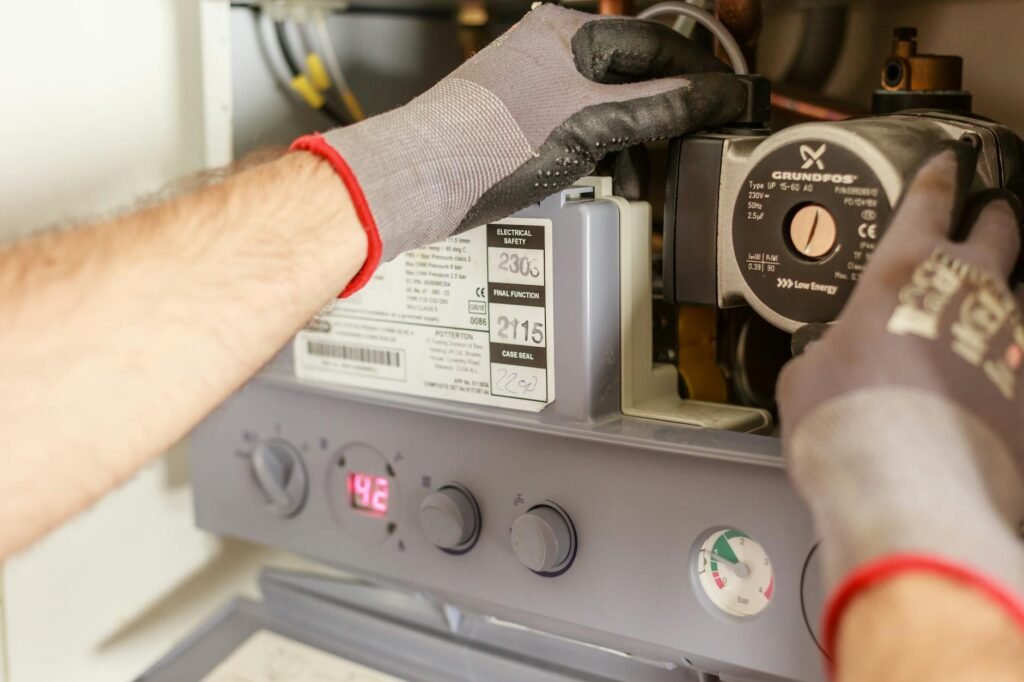
Some trades work cannot be deferred regardless of economic conditions:
- Gas boiler breakdowns in winter
- Electrical faults causing loss of power
- Burst pipes and plumbing emergencies
- Mandatory EICR surveys for landlords (legal requirement)
- Mandatory CP12 certificates for landlords (legal requirement)
Tradespeople positioned for emergency and legal-compliance work are the most insulated from economic downturns. If your marketing emphasises emergency availability and regulatory compliance work (CP12, EICR), you maintain a floor of essential income.
3. Diversify Your Customer Base
A business where 40% of revenue comes from one customer is fragile. A business with 50 regular customers losing three of them in a downturn barely notices.
Avoid over-dependence on:
– Single builders or developers
– Single letting agents
– Single commercial clients
Build breadth. The marketing effort to add more customers is the same as the effort to keep fewer larger ones.
4. Keep Overhead Lean
The most vulnerable trades businesses in downturns are those with high fixed overhead – expensive vehicles on finance, high-rent premises, large employed teams. Keep your cost base as variable as possible, particularly in the early years.
Use subcontractors before employing. Lease rather than buy equipment until cash flow supports ownership. A lean cost structure means you can weather slow periods without existential threat.
5. Get Good at Quoting and Convert More Leads
A 40% lead-to-job conversion rate versus 25% is the equivalent of a 60% increase in revenue from the same marketing spend. Improving your quoting process – professional presentation, prompt response, accurate pricing – is the highest-leverage activity for protecting revenue without increasing costs.
Kwowta helps tradespeople send professional quotes fast.
Frequently Asked Questions
Are trades businesses recession-proof?
More resilient than most small businesses, but not recession-proof. Discretionary home improvements slow during downturns; emergency and maintenance work does not. See Federation of Master Builders recession guidance for industry-specific economic analysis.
What should a trades business do to prepare for an economic slowdown?
Build cash reserves (3 months overhead minimum), increase maintenance contract revenue, reduce dependence on single customers, keep overhead lean, and focus marketing on essential and compliance-driven work. See HMRC’s business resilience guidance for financial planning support.
Kwowta helps trades businesses convert more enquiries into jobs with professional quotes. Try free for 6 months at kwowta.com.