
What UK Homeowners Are Spending Money on in 2026

Understanding what UK homeowners are spending money on in 2026 is commercially valuable for any tradesperson – it tells you where demand is strongest, which services to promote, and where to focus your marketing. Here is what the data and market signals tell us.
Energy Efficiency: The Biggest Growth Category
Energy costs have permanently recalibrated homeowner thinking. The category that has seen the biggest growth in homeowner spending since 2022 is energy efficiency:
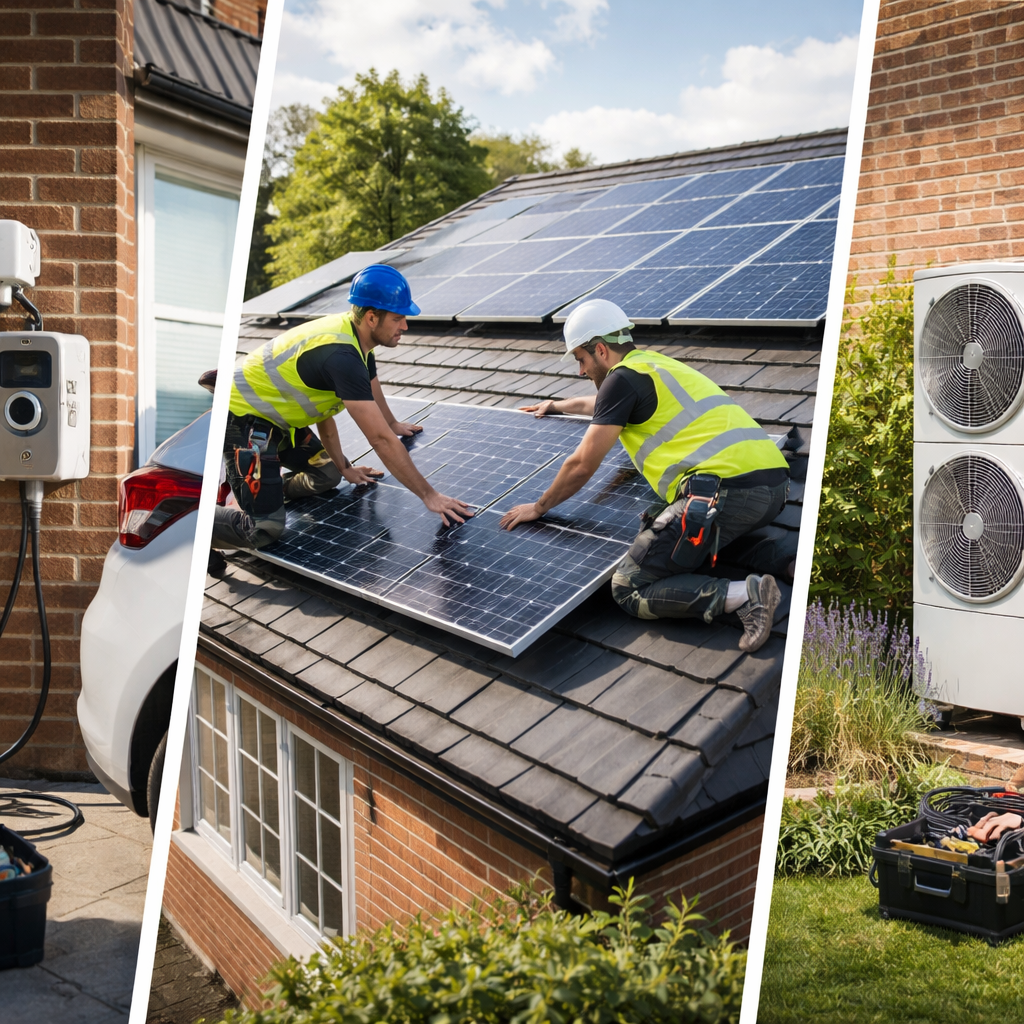
- Solar PV and battery storage – payback periods of 6-10 years and SEG income make this a compelling investment. Demand has remained strong even as supply has grown. Solar Energy UK reports year-on-year installation growth.
- EV charge points – nearly 50% of new car registrations are now electric or hybrid. The majority of EV owners charge at home, and the OZEV grant has driven significant domestic charger installation volumes.
- Heat pumps and hybrid heating – slower growth than solar, partly due to the upfront cost and insulation prerequisites, but the Boiler Upgrade Scheme grant of £7,500 is driving uptake among the right property types.
- Insulation and draught-proofing – loft and cavity wall insulation installations have surged with energy prices.
Bathroom and Kitchen Renovations: The Perennial Favourites
Bathrooms and kitchens consistently rank as the top home improvement categories by spending volume. Key trends in 2026:
Bathrooms: Wet rooms and walk-in showers have overtaken bath-first designs in new bathroom installations. Homeowners are spending more on tiles, fixtures, and finishes – the average bathroom renovation budget has increased. For plumbers and tilers with a bathroom package offering, demand is strong.
Kitchens: Kitchen extensions (single-storey rear extensions) are among the most common permitted development projects. The combination of builder, electrician, and plumber work generates significant combined trade spend per project.
Outdoor Living: Decking, Landscaping, and Garden Rooms
The post-pandemic uplift in outdoor living investment has been sustained. Homeowners with gardens are investing in:
– Decking and patio areas
– Garden rooms and outbuildings (permitted development)
– Outdoor electrical installations (sockets, lighting, security cameras)
– Garden drainage and landscaping
For landscapers, groundworkers, and electricians, this is a strong growth area particularly in spring and summer.
What Homeowners Are Not Spending On Right Now
Large-scale extensions and loft conversions requiring planning permission have seen slower growth – partly due to planning uncertainty and partly due to mortgage rate impacts on homeowners’ equity release.
Decorating has seen a slight slowdown in discretionary spend – homeowners prioritising high-ROI energy efficiency projects over cosmetic work.
Conclusion
The trades industry rewards those who combine excellent work with professional business practices. The guidance above covers the practical fundamentals – applying it consistently is what separates the tradespeople who stay busy and profitable from those who struggle with feast-and-famine cycles. For further guidance, visit RICS: homeowner spend data.
Frequently Asked Questions
What home improvements add the most value to a UK home in 2026?
According to Rightmove and Zoopla data, loft conversions, kitchen extensions, new kitchens and bathrooms, and solar installations are among the highest-ROI home improvements. EPC rating improvements are increasingly valued by buyers and lenders.
How much do UK homeowners spend on home improvements per year?
Average UK homeowner home improvement spending is estimated at £5,000-£8,000 per year by Statista UK consumer data. This varies significantly by region, property value, and whether the homeowner is undertaking a major project in that year.