How to Market a Solar Installation Business in the UK
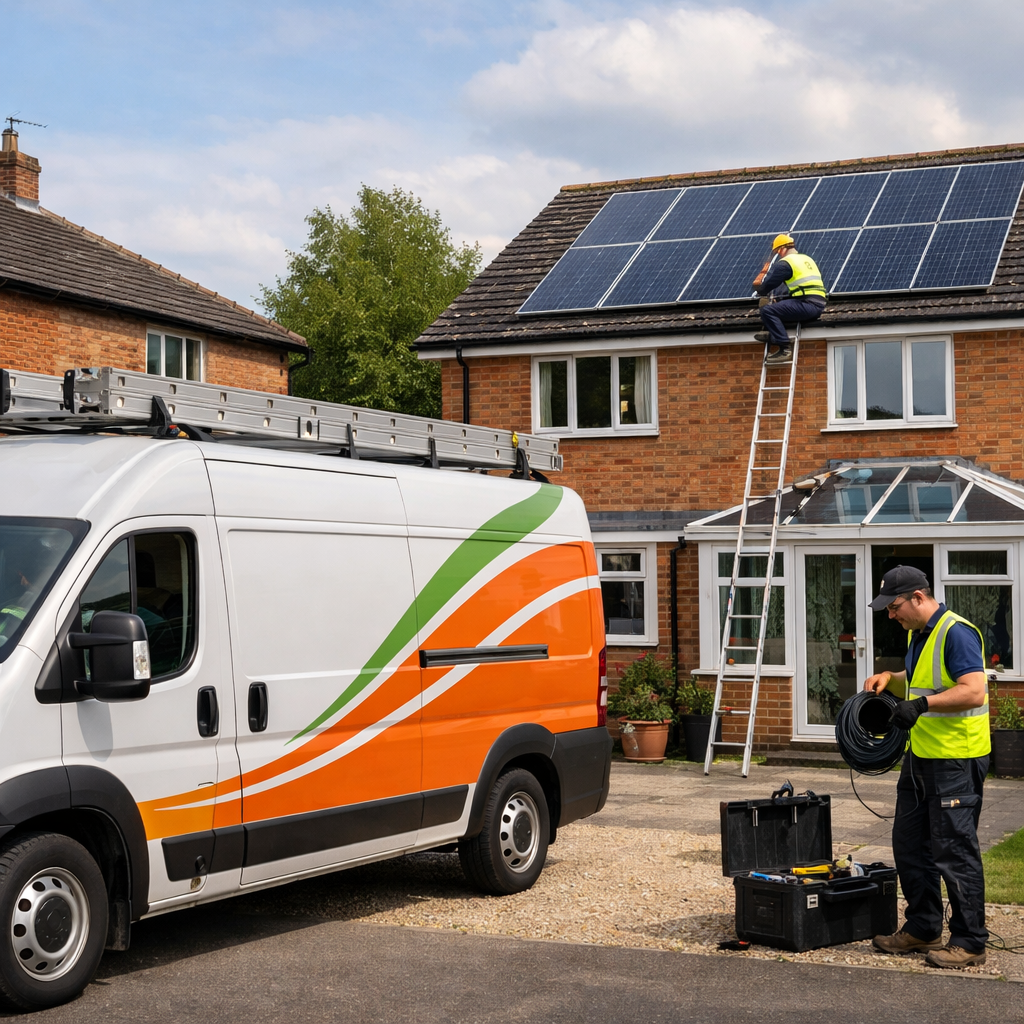
Marketing a solar business is different from marketing most trades. Solar is a high-value, considered purchase – customers research extensively before deciding, and the sales cycle is weeks, not days. Your marketing needs to match that behaviour: build visibility, build credibility, and convert leads efficiently at every stage of the funnel.
Understand the Solar Customer Journey
Before spending money on marketing, understand how solar customers find installers:
- Awareness – they see solar mentioned online, on a neighbour’s roof, or in their energy bill
- Research – they search “solar panels [town]”, read comparison articles, check review sites
- Shortlist – they request quotes from 2-4 local installers
- Decision – they compare quotes, check reviews, and choose
The implication: your marketing needs to be present at the research stage and convert effectively at the quote stage. You win solar jobs through visibility, credibility (reviews, MCS badge, professional presentation), and a persuasive quote.
Google Business Profile: Your Most Important Free Asset
For any local solar business, a complete and active Google Business Profile is the highest-leverage free marketing activity.
Optimise yours: – Set your primary category to “Solar energy equipment supplier” or “Solar energy contractor” – List all services: solar PV, battery storage, EV charging – Set your service area (all postcodes/towns you cover) – Upload photos – before/after shots of installations, team photos, van photos – Collect reviews consistently (see below) – Post updates regularly – completed jobs, tips, seasonal content
A well-optimised GBP with 30+ reviews will appear in the local map pack for “solar installer [town]” searches – the most commercially valuable position in local search.
SEO: Building Long-Term Organic Visibility
Solar SEO takes 6-12 months to deliver meaningful traffic, but the returns compound over time. Key priorities:
Localised service pages – a dedicated page for each town/area you cover: “Solar Panel Installation in [Town]”. Include local references, customer testimonials from that area, and a clear call to action.
Educational content – blog posts answering the questions solar customers are searching for: “How much do solar panels save on bills”, “Is solar worth it in [region]”, “Solar panel grants UK 2026”. These build authority and capture early-funnel research traffic.
MCS and accreditation badges – display your MCS Certified badge, NICEIC/NAPIT logo, and any RECC membership prominently. These are trust signals that reduce bounce rate.
Schema markup – add LocalBusiness and Review schema to your website. Helps search engines understand and display your business information correctly.
Google Ads: Fast Visibility, Expensive Clicks
Solar is one of the most competitive categories in Google Ads – expect to pay £15-50 per click for “solar panels [city]” terms. This means:
- A 3% conversion rate on a landing page at £30/click = £1,000 per lead
- At a 40% close rate = £2,500 customer acquisition cost
Is this viable? For a £6,000 job at 30% margin = £1,800 gross profit per job. At £2,500 CAC, no. You need better conversion rates or lower CPC to make Google Ads work.
How to make it viable: – Use very specific, long-tail keywords (“solar panel installation [specific town]” rather than “solar panels UK”) – Build a high-converting landing page (not your homepage) – Collect reviews aggressively to improve conversion rate – Retarget website visitors who didn’t convert
Many solar businesses find Google Ads viable once they have 50+ reviews and a professional landing page, but not in their first year.
Lead Generation Platforms
Solar-specific lead generation platforms include:
| Platform | Model | Notes |
|---|---|---|
| GreenMatch | Lead gen | UK-focused, solar and renewables |
| TheGreenAge | Lead gen | Comparison and lead gen |
| Checkatrade | Profile + leads | Lower solar volume than domestic trades |
| Which? Trusted Traders | Profile | Higher quality leads, requires vetting |
Lead platforms can generate volume quickly, but leads are shared with multiple installers. Speed of response matters enormously – calling a lead within 5 minutes of receipt dramatically increases conversion versus calling within an hour.
Referrals: The Highest Converting Channel
A solar customer who refers a neighbour converts at 60-80% versus 10-20% for a cold lead. Solar has a natural referral mechanism – the panels are visible on the roof and neighbours notice them.
Build a formal referral programme: – Every completed customer gets a referral card or QR code – Referral incentive: £150-300 cash or bill credit for a confirmed install from their referral – Follow up every customer at the 6-month mark: “How’s the system performing? Have any neighbours asked about yours?”
A business with 50 installed customers and a working referral system can generate 10-15 referral leads per year – some of the highest-quality leads available.
Social Media for Solar
Solar before-and-afters perform well on visual platforms:
Instagram/Facebook: Document every installation – panels going up, final shot on completed roof, monitoring app showing first generation. Short-form video (reels, TikTok) of installation process gets significant organic reach.
Nextdoor: Hyperlocal platform where neighbours discuss home improvements. Solar conversations are common. Join as a local business and engage helpfully.
LinkedIn: Relevant if you’re targeting commercial solar – property managers, commercial landlords, facilities managers all use LinkedIn.
Frequently Asked Questions
How much should a solar installation business spend on marketing? A reasonable starting budget is 5-10% of target annual revenue. For a business targeting £300,000 turnover, that’s £15,000-30,000/year. In the early months, prioritise free channels (GBP, referrals) before committing to paid advertising.
Do I need a website to get solar leads? Not from day one – a Google Business Profile and presence on a lead platform can generate early work. But a professional website becomes essential within 6 months for SEO, credibility, and lead conversion. Solar customers research online and will look you up.
How important are reviews for a solar business? Critically important. Solar is a £6,000+ purchase decision. Customers read reviews carefully. A business with 50 Google reviews at 4.9 stars is dramatically more credible than one with 10. Collecting reviews should be a systematic part of every job handover.
CoreQuote helps solar installers convert leads into jobs with professional, detailed quotes that include system specs and projected savings. Try free for 6 months at kwowta.com.
Related reading: