How Long Does It Take to Become a Plasterer?
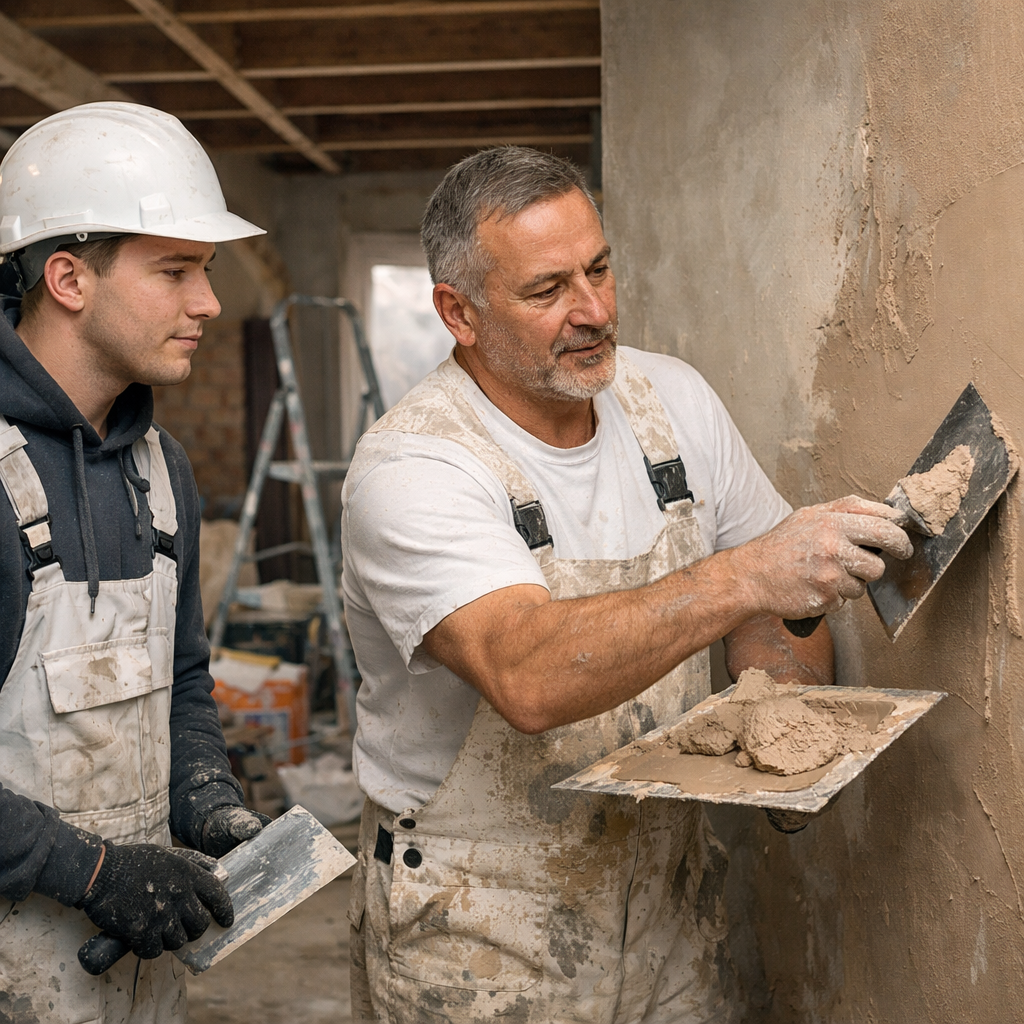
How long it takes to become a plasterer depends on the route you take – but most people are competently plastering within 2-3 years via a formal route, or sooner via intensive training. This guide breaks down the realistic timescales for every pathway to becoming a qualified plasterer in the UK.
How Long Does It Take to Become a Plasterer via Apprenticeship?
The plastering apprenticeship takes 2 to 3 years. It combines on-the-job training with a local college or training provider and leads to an NVQ Level 2 in Plastering – the standard trade qualification.
During an apprenticeship to become a plasterer: – Year 1: Core skills – floating, skimming, basic rendering – Year 2: Advanced techniques, dry lining, exam preparation – Year 3 (where applicable): Specialist areas, NVQ assessment, CSCS card
Find plastering apprenticeships via Find an Apprenticeship (gov.uk) and CITB’s apprenticeship support service.
How Long Does It Take to Become a Plasterer via Adult Learning?
For adults changing careers, the timescale to become a plasterer varies:
College plastering course: 10-30 weeks (full-time or part-time). Covers core techniques but doesn’t always lead to a full NVQ. Good for getting to a working standard quickly.
NVQ via OSAT (On-Site Assessment and Training): 12-18 months. For people already working in the trade who need formal recognition of their skills. An assessor visits your workplace and assesses competence.
Private training centres: Some providers (including BSS Training) offer intensive plastering courses of 1-4 weeks. These provide a practical foundation but are not a substitute for the full NVQ pathway.
How Long to Become a Competent Plasterer (Without Formal Training)
Many plasterers are essentially self-taught – learning by working alongside experienced plasterers, watching tutorials, and practising obsessively. The honest timescale:
- Basic skim coat: Achievable in weeks with practice
- Consistent quality finish: 1-2 years of regular practice
- Full commercial competence: 3-5 years
The gap between being able to plaster and being consistently good enough to charge professional rates is significant. Customers can see the quality of a plaster finish immediately – reputation depends on it.
Becoming a Plasterer After Another Trade
Electricians, joiners, and builders who want to add plastering to their services often learn faster because they understand construction, tools, and working in occupied properties. Allow 6-12 months of practice to achieve a commercially acceptable standard from this background.
Frequently Asked Questions
How long does it take to become a plasterer from scratch? How long it takes to become a plasterer from scratch depends on your route. Via apprenticeship: 2-3 years to NVQ qualification. Via adult learning and OSAT: 12-24 months to equivalent qualification. Via intensive college course and practical experience: 1-2 years to competent working standard.
Can you become a plasterer without an apprenticeship? Yes. Many successful plasterers qualified via on-site assessment (OSAT) routes, adult learning, or simply accumulated experience. See NOCN’s OSAT plastering route for the fastest formal qualification pathway for experienced plasterers.
Is plastering hard to learn? Plastering has a steeper learning curve than many people expect. Achieving a truly flat, smooth finish requires precise technique, the right tools, and significant practice. Most plasterers acknowledge they didn’t achieve commercial-quality results for their first 12-18 months.
How long to become a plasterer good enough to charge full rates? Most plasterers starting from scratch take 2-3 years to consistently deliver work they’re confident charging full market rates for. Some achieve this faster with intensive practice and good mentorship.
Ready to run your plastering business professionally? CoreQuote handles your quotes and invoices from your phone. Try free for 6 months at kwowta.com.
Related reading: