How to Become a Domestic Installer (Part P Qualified)
Becoming a Domestic Installer is the most accessible route to legally self-certifying domestic electrical work – and it’s the entry-level qualification tier within the Part P competent person scheme framework. This guide explains what a Domestic Installer is, how to become one, and when it’s the right qualification versus a full Approved Electrician route.
What is a Domestic Installer?
A Domestic Installer is a person who holds sufficient qualifications and competent person scheme registration to carry out and self-certify defined domestic electrical installation work – specifically:
- Installation of complete circuits in existing domestic dwellings
- Consumer unit replacements in domestic dwellings
- Complete rewires in domestic dwellings
A Domestic Installer is not qualified to carry out electrical work in commercial premises, new builds from scratch, or any work requiring the full design and verification competencies of an Approved Electrician (NVQ Level 3 full qualification).
Domestic Installer vs Approved Electrician
| Domestic Installer | Approved Electrician | |
|---|---|---|
| Scope | Domestic dwellings only | Domestic + commercial + industrial |
| Qualification required | C&G 2330 Level 2 or equivalent + 18th Edition + Testing | NVQ Level 3 + 18th Edition + 2391 + AM2 |
| EICR surveys | No (cannot certify EICRs independently) | Yes |
| New build from scratch | No | Yes |
| Commercial work | No | Yes |
| Typical registration body | NAPIT, NICEIC (Domestic Installer grade) | NICEIC (Approved Contractor), NAPIT |
How to Become a Domestic Installer
Route 1: Qualified electrician pathway (fastest) If you hold NVQ Level 2 (or equivalent) + 18th Edition, the additional requirements for Domestic Installer registration are: – Basic inspection and testing competence (C&G 2392 or equivalent) – Competent person scheme application
Route 2: Domestic Installer specific training Some training providers offer dedicated Domestic Installer packages: – 18th Edition (C&G 2382-22) – City & Guilds 2392 (Fundamental Inspection and Testing) – Practical assessment
Providers including ETC (Electrical Training Company) and NICEIC Training offer structured Domestic Installer pathways. Typical total cost: £600-£1,500 for the full qualification package.
Registering as a Domestic Installer with NAPIT or NICEIC
Once qualified, apply for Domestic Installer registration:
NAPIT: napit.org.uk/domestic-installer – annual fee approximately £200-£350/year
NICEIC: Domestic Installer grade registration – annual fee approximately £250-£400/year
The application involves: qualification certificates, insurance certificate, and a technical assessment of a completed domestic installation.
Frequently Asked Questions
Is a Domestic Installer the same as a fully qualified electrician? No. A Domestic Installer is qualified for defined domestic work only. A fully qualified Approved Electrician (NVQ Level 3) has a broader scope including commercial, industrial, and new build work, plus the ability to carry out and certify EICR surveys. If you want to offer EICRs or commercial work, the full Approved Electrician route is needed.
Can a Domestic Installer carry out an EICR? No. EICR surveys require City & Guilds 2391 (or 2394/2395) Inspection and Testing qualification, which is not included in the Domestic Installer pathway. A Domestic Installer can do remedial work identified by an EICR, but cannot conduct or certify the survey itself.
Is the Domestic Installer route worth it? For someone who wants to work exclusively on domestic installations, yes – it’s a faster and cheaper route to self-certification rights than the full NVQ Level 3 pathway. For anyone considering commercial work, EICRs, or building a broader electrical business, the full NVQ Level 3 route is the better investment. See NICEIC’s training guidance for course options.
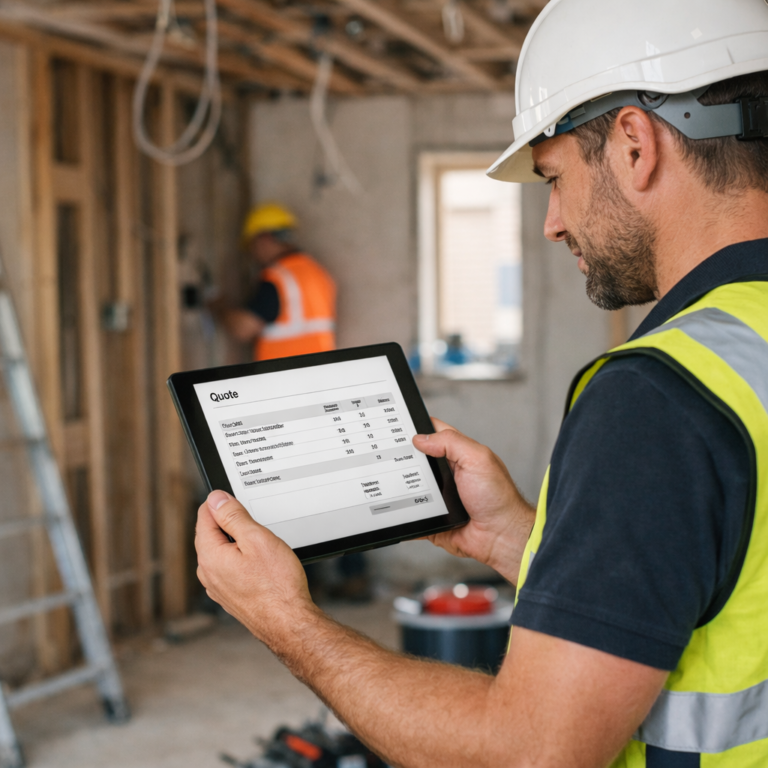
CoreQuote is a quoting app for Domestic Installers and Approved Electricians. Try free for 6 months at kwowta.com.
Related reading: