
What Qualifications Does a Plasterer Need? A Complete Guide
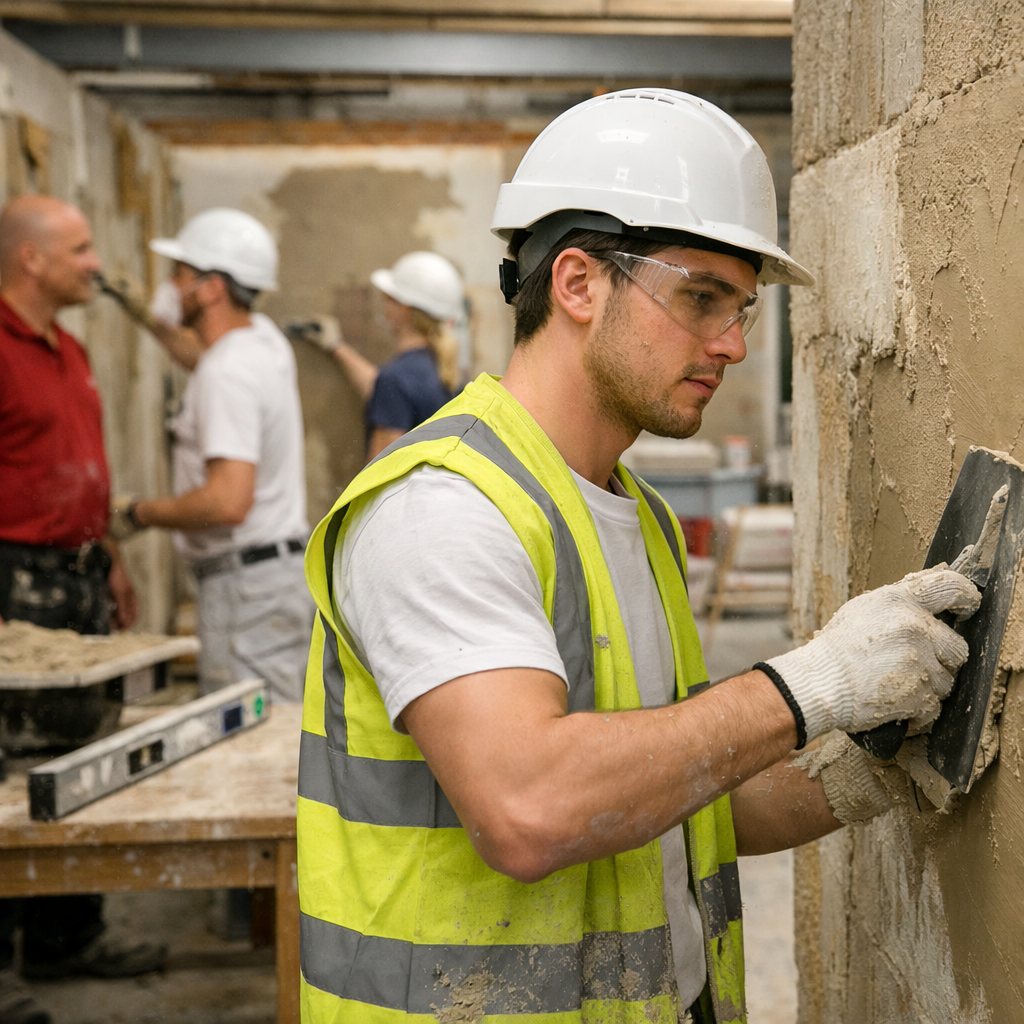
What qualifications does a plasterer need?
This is one of the most searched questions among people considering a career in plastering – and the answer is more nuanced than a simple yes or no. A plasterer needs no licence to trade, but specific qualifications unlock commercial work, better rates, and professional credibility.This guide explains what plastering qualifications exist, which ones a plasterer needs for different types of work, and how to get them.
What Qualifications Does a Plasterer Need for Domestic Work?
For domestic plastering work – skimming, rendering, and dry lining in private homes – a plasterer technically needs no formal qualifications. Public liability insurance is the only practical requirement.
However, domestic customers increasingly search for reviews and credentials online before hiring. A plasterer with demonstrable qualifications – even just a CSCS card or an NVQ – is easier to trust than one without.
What Qualifications Does a Plasterer Need for Commercial Work?
For commercial plastering work on building sites, a plasterer needs:
- CSCS card – required on virtually all UK commercial sites. The relevant card for a qualified plasterer is the Blue CSCS Skilled Worker card, requiring NVQ Level 2 and a passed CITB H&S test
- NVQ Level 2 in Plastering – the qualification underpinning the CSCS card
- Relevant H&S training – first aid, working at height awareness, COSHH awareness
See cscs.uk.com for full CSCS card eligibility criteria.
The NVQ Route: What a Plasterer Needs to Know
The NVQ Level 2 in Plastering is the core qualification for practising plasterers. It can be achieved via:
Apprenticeship: The preferred route for school leavers. 2-3 years combining on-the-job training with college attendance. CITB supports plastering apprenticeships.
On-Site Assessment and Training (OSAT): For plasterers already working in the trade. An assessor visits your workplace and assesses your competence against NVQ standards. Can be completed in 12-18 months.
Adult learner courses: Some colleges offer full-time plastering courses for adults. Check local colleges via UCAS for availability.
Specialist Plastering Qualifications
Beyond the NVQ, specialist qualifications open premium market segments:
Fibrous plastering (NVQ Level 3 elements): For ornamental plasterwork, coving, and ceiling roses. Increasingly rare skill commanding premium rates.
Lime plastering: No single formal qualification, but specialist training through SPAB (Society for the Protection of Ancient Buildings) or Historic England supports heritage work.
External Wall Insulation (EWI): SWIGA (Solid Wall Insulation Guarantee Agency) approved training for EWI render systems – a fast-growing market.
Conclusion
Qualifications and registrations are an investment in the long-term credibility of your business. Customers are increasingly checking credentials before they hire, and the trades that are fully certified consistently win better work at better prices than those who are not. For further guidance, visit City & Guilds: plastering qualifications.
Frequently Asked Questions
What qualifications does a plasterer need to start a business?
No qualifications are legally required to start a plastering business. However, a CSCS card (requiring NVQ Level 2) is needed for commercial site work, and qualifications significantly increase customer confidence and the rates you can charge.How long does it take to get plastering qualifications?
An NVQ Level 2 via apprenticeship takes 2-3 years. Via OSAT (on-site assessment) for experienced plasterers, 12-18 months. A short intensive plastering course at a college can take 10-20 weeks but doesn’t lead to a full NVQ.Does a plasterer need COSHH training?
COSHH (Control of Substances Hazardous to Health) awareness is relevant for plasterers working with gypsum dust, cement, and adhesives. While not a formal certification requirement, HSE COSHH guidance should be understood by every plasterer.Related reading: