
How Much Does It Cost to Start a Construction Company in the UK?
**You can start a basic construction business for under £1,000. A properly equipped, credibly presented construction company typically costs £5,000-15,000 to set up.** The range is wide because it depends heavily on what you already have, what work you’re targeting, and how quickly you want to look established.

This guide breaks down the real costs so you can plan properly.
—
## The Minimum Viable Start
If you already have tools and a vehicle, here’s what it costs to start legally and start working:
| Item | Cost |
|—|—|
| HMRC sole trader registration | Free |
| Public liability insurance (basic) | £100-200/year |
| Business bank account | Free (most banks offer free accounts) |
| Basic workwear | £50-100 |
| Business cards | £20-30 |
| **Total minimum** | **~£200-400** |
This gets you legally trading. It’s not impressive, but it works.
—
## The Realistic First-Year Budget
To start properly – looking credible, operating efficiently, and not making expensive mistakes:
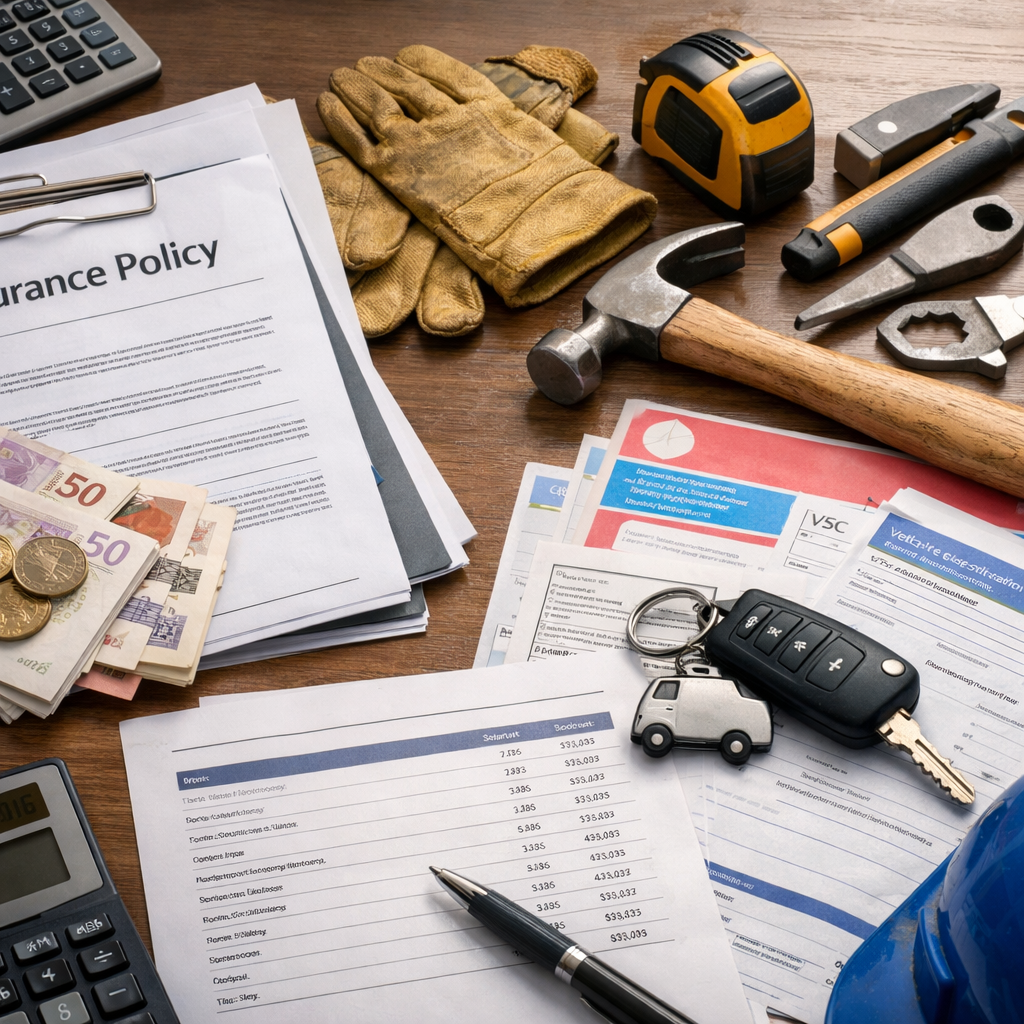
| Item | Typical Cost |
|—|—|
| **Legal & Compliance** | |
| HMRC registration | Free |
| Companies House registration (if limited company) | £50 |
| Public liability insurance £2m | £200-400/year |
| Employers liability (if taking on staff) | £200-500/year |
| Tools & equipment insurance | £100-300/year |
| Contract works insurance | £200-600/year |
| **Tools & Equipment** | |
| Core tools (if starting from scratch) | £1,000-5,000 |
| Tool storage/van racking | £200-500 |
| **Vehicle** | |
| Van (used, basic) | £5,000-15,000 or £150-400/month finance |
| Van insurance (business use) | £1,000-2,500/year |
| Van signage | £200-500 |
| **Business Setup** | |
| Accountant (first year) | £500-1,500 |
| Accounting software | £15-30/month |
| Quoting & invoicing software | Free-£10/month |
| Website (basic) | £500-2,000 or £20-50/month |
| Business cards, workwear | £100-300 |
| **Certifications** | |
| CSCS card | £36 + £22.50 test |
| SMSTS (5-day course) | £400-600 |
| Trade membership (FMB etc.) | £300-500/year |
—
## Realistic Total Scenarios
**Scenario A – Sole trader, have tools and van, targeting domestic work:**
Insurance + accountant + basic setup = **£1,500-3,000** in year one
**Scenario B – Limited company, need van, targeting domestic and small commercial:**
All of the above + van + Constructionline + proper equipment = **£8,000-20,000** in year one
**Scenario C – Starting from scratch, no tools, no van:**
Full equipment purchase + vehicle + all setup costs = **£20,000-50,000+**
Most people starting a construction business are in Scenario A or B – they have some assets and are adding what they need.
—
## The Hidden Costs People Miss
**Working capital** – you’ll spend money on materials before you get paid. Even with deposits, there will be moments where you’re out of pocket waiting for payment. Budget for at least one month’s operating costs as a cash buffer.
**Your own unpaid time** – the first few months you’ll spend significant time on admin, quoting, and setup rather than earning. Factor this into your startup budget.
**Tax** – your first Self Assessment bill arrives in January after your first trading year and includes a “payment on account” – effectively paying six months of next year’s tax upfront. Many new businesses are blindsided by this. Put 25-30% of all income aside from day one.
**Late payment** – you will have at least one customer who pays late or disputes an invoice in your first year. Build a buffer so this doesn’t derail the business.
**Mistakes** – pricing errors, material waste, underestimating job complexity. Every construction business makes these in the early months. Budget for them.
—
## What to Spend Money On First
If your budget is limited, prioritise in this order:
1. **Insurance** – non-negotiable. Get this before you start work
2. **Accountant** – the money you save on tax will more than cover the cost
3. **Quoting system** – professional quotes win more work and prevent disputes
4. **CSCS card / SMSTS** – if targeting commercial work, these unlock the work
5. **Van** – necessary eventually, not always day one
6. **Website** – useful from month 3-6, not day one
—
## Finance Options
If upfront costs are a barrier:
**Start Up Loans** – government-backed personal loans of £500-£25,000 at 6% fixed interest. Available for businesses less than 3 years old. startuploans.co.uk
**Van finance** – most van dealers offer finance. You can often get a basic working van for £150-200/month. Keep the deposit low and preserve your cash buffer.
**Trade credit** – apply for a trade account at your builders merchant. Most extend 30-day credit to new businesses with a trading address. Buys you time between spending on materials and getting paid.
**Asset finance** – specialist tools and equipment can be financed. Useful for expensive items like scaffolding, MEWPs or specialist vehicles.
—
## Frequently Asked Questions
How much does it cost to register a construction company?
As a sole trader – free. As a limited company – £50 online at Companies House. The business registration itself is the cheapest part of starting a construction company.
How much is public liability insurance for a construction company?
For a sole trader doing domestic work, expect £200-400/year for £2m cover. Commercial work or higher-risk activities (working at height, groundworks) will be higher. Larger businesses with employees pay significantly more.
Do I need a van to start a construction company?
Not from day one. A car works for many trades initially, particularly those with lighter tools. A van becomes necessary when tools, materials and equipment volume justifies it – typically within the first 6 months.
How much should I budget for tools when starting a construction business?
It depends entirely on your trade. An electrician starting out may need £2,000-3,000 of core tools. A groundworker or builder may need £5,000-10,000+ for machinery and specialist equipment. If you’re coming from employment, you likely already own the core tools for your trade.
Is it cheaper to start a construction company as a sole trader or limited company?
Sole trader is significantly cheaper to set up and maintain – no Companies House fee, simpler accounting, lower accountancy costs. The saving in year one is typically £500-1,500 in accountancy fees alone. Convert to a limited company when the tax efficiency justifies the additional cost.
—
—
Conclusion
Starting your own trades business is one of the most financially and personally rewarding things a skilled tradesperson can do. The foundations – the right structure, the right insurance, the right systems – take a few weeks to set up properly, but getting them right from the start saves significant time and money further down the line. For further guidance, visit GOV.UK: starting a business.
Free calculator by CoreQuote — the quoting app for trades
Related reading: